Your feet do a lot of work without much thanks. But if you have diabetes, even tiny problems down there can turn into something much bigger, much faster. Nearly one in four people with diabetes will deal with a foot ulcer at some point, and once that happens, the odds of amputation go up significantly.
That's a hard number to read, but it's also the reason diabetic foot care in Calgary has become something people take seriously instead of putting off. Let's look at the foot problems that tend to crop up most for diabetic patients, and what a podiatrist actually does about them.
You Might Not Feel It Coming
This is the scary part. Diabetes can damage nerves over time, a thing called peripheral neuropathy, and it often shows up first in the feet. What that means in real life is someone could step on a pebble, get a blister from new shoes, or cut their foot, and not feel a thing. No pain, no warning. So the injury just sits there, untreated, until it's gotten worse. That's exactly why regular foot checks matter so much. The nurse or podiatrist is essentially doing the job your nerves used to do.
Wounds That Just Won't Close
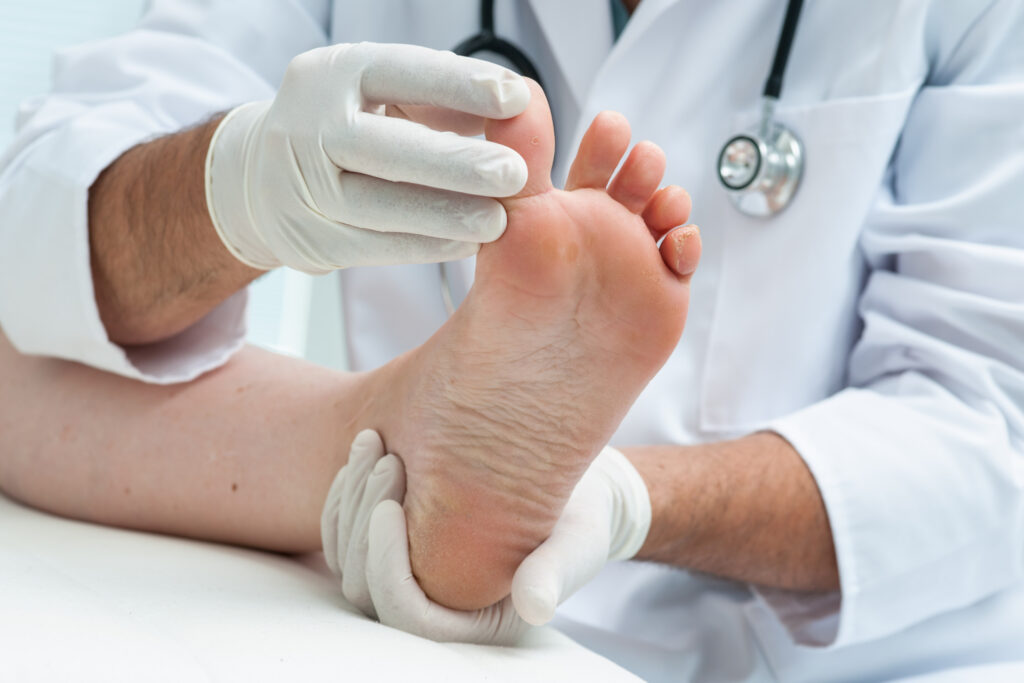
Circulation tends to take a hit with diabetes too, which means less blood reaching the feet. And less blood means slower healing. A small cut that would scab over in a couple of days for most people can stick around for weeks instead, giving bacteria plenty of time to move in. This is why even a tiny scrape on a diabetic foot deserves more attention than you'd normally give it.
Calluses That Sneak Up On You
Shoes that don't fit quite right, or pressure points from how someone walks, can cause skin to thicken up faster than usual. Over time these calluses harden, and they start pressing down on the layers underneath. Sometimes that pressure leads to an ulcer forming right under a callus, completely out of sight. Getting these trimmed properly takes a steady hand, since going in too aggressively can cause a wound on skin that's already compromised.
Nail and Fungal Issues
Fungal infections love feet that have reduced circulation, which unfortunately describes a lot of diabetic feet. Nails can thicken, change colour, or become brittle. Ingrown toenails, which sound minor, can actually become a serious entry point for infection if they're left alone too long.
Where a Podiatrist Comes In
A good diabetic podiatrist in Calgary isn't just there for when something's already wrong. Most of the value comes from catching things before they become a problem. That means regular checks on circulation, testing for nerve sensation, and looking closely at skin and nails for changes that might seem small but matter.
Then there's the hands-on side. Safely trimming thick nails, managing calluses before they turn into ulcers, treating small wounds early so they actually heal. And honestly, a lot of it comes down to education too. Showing people how to check their own feet, what shoes to avoid, and when something needs a call right away versus waiting until the next visit.
Conclusion
Diabetic foot problems rarely show up loudly. They build quietly, often without pain, which is exactly why ongoing professional care matters so much. Catching things early usually means a simple fix instead of a major one. If you're looking for trusted diabetic foot care in Calgary, Fabulous Foot Care offers expert in-clinic and mobile services across Calgary, Airdrie, Chestermere, and Cochrane.